

Snow Mold on Your Ohio Lawn: Identification, Treatment, and Spring Recovery
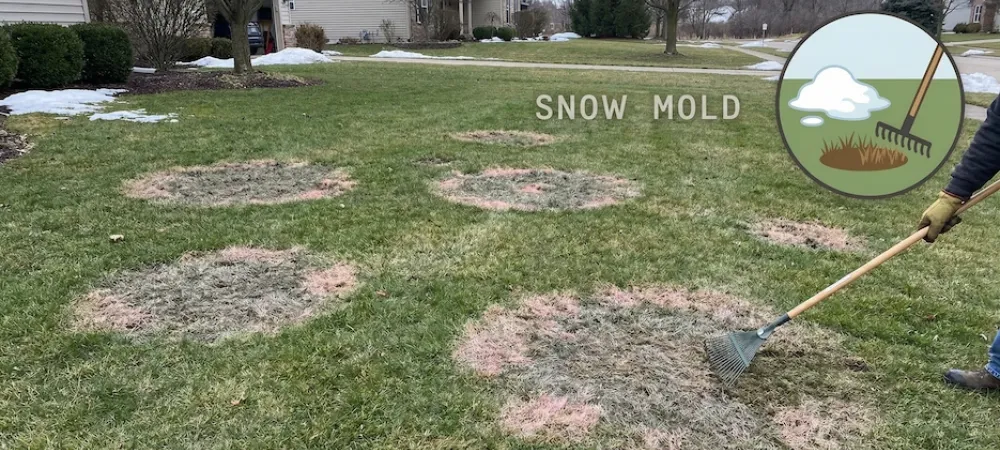
When the snow finally melts across Northeast Ohio, the excitement of spring's arrival can quickly turn to concern when you discover mysterious circular patches of matted, discolored grass covering your lawn. You're not alone; this common fungal disease affects thousands of Ohio homeowners every year, particularly in areas like Cleveland and Akron, where lake-effect snow creates ideal conditions for snow mold development.
Quick Answer: What Is Snow Mold and Can Your Lawn Recover?
Snow mold is a fungal disease that develops under snow cover during winter, appearing as circular patches of matted, dead-looking grass when snow melts in spring. The good news: most affected lawns recover naturally within 2-4 weeks as temperatures warm, though severe cases may need light overseeding. Simple DIY treatment involves gently raking affected areas to improve air circulation and letting nature do the rest.
Understanding Snow Mold: The Fungus That Thrives Under Winter's Blanket
Snow mold refers to a group of fungal diseases that attack cool-season grasses under snow cover. According to Penn State Extension, "This disease is caused by the fungus Typhula incarnata and results in patches of blighted turf on lawns, golf courses, and athletic fields". The disease develops when specific winter conditions align: extended snow cover keeps grass wet while temperatures hover just above freezing, the exact conditions at the soil level that fungi love.
Two primary types affect Ohio lawns. Pink snow mold, caused by Microdochium nivale, appears as white to pink circular patches that feel slimy when wet. Penn State research notes that pink snow mold "can affect all cool-season turfgrass species and is common during years where a thick layer of snow cover lasts for long periods during mid to late winter". Gray snow mold, caused by Typhula species, presents as gray-brown patches and is generally less aggressive than its pink counterpart.
These fungi aren't harmful to humans or pets, but they can certainly make your lawn look rough when spring arrives. The patches typically range from 3 inches to 3 feet in diameter and most commonly appear in low-lying areas, shaded spots, or anywhere snow lingers longest, like against north-facing walls or where snowplows create massive piles.
Why Northeast Ohio Gets Hit Hard by Snow Mold
Northeast Ohio's climate creates a perfect storm for snow mold development. The region's lake effect snow from Lake Erie often provides 30+ days of continuous snow cover, more than enough time for these fungi to establish and spread. Iowa State University Extension explains that "extended snow cover on ground that is not completely frozen is conducive to turf diseases called snow molds."
Our freeze-thaw cycles keep grass consistently wet under the snow, and when snowplows push heavy banks onto lawns or snow drifts accumulate in low spots, you've got prime real estate for fungal growth. Cleveland metro areas face a higher risk due to intensified lake-effect patterns, while Akron and Medina valley areas face challenges from poor drainage that compound the problem.
Primary Risk Factors for Snow Mold Development
Several conditions make your lawn more vulnerable. Extended periods of snow cover, lasting more than 30 days, give fungi ample time to colonize your grass. If your lawn went into winter too long or matted down with unremoved leaves, you've created an insulating layer that holds moisture, exactly what snow mold fungi need. Excessive thatch buildup provides organic matter for fungi to feed on, while late fall nitrogen fertilization (after mid-October in Northeast Ohio) encourages lush, succulent growth that's particularly susceptible to infection.
Areas with poor drainage stay wetter longer under snow, and north-facing slopes or heavily shaded areas receive less sunlight, delaying drying even after snow melts. In our experience serving Northeast Ohio lawns for over 30 years, we've found that properties with a combination of these factors, particularly poor drainage and heavy thatch, see snow mold return year after year until the underlying issues are addressed.
How to Identify Snow Mold on Your Ohio Lawn
Snow mold symptoms appear as snow recedes in March and April. Visual identification differs between types. Pink snow mold creates circular patches that are white to pink in color, with grass appearing slimy and matted when wet. As affected areas dry, you'll notice a pinkish tinge on leaf blades. Gray snow mold produces gray-brown circular patches with matted grass that take on a bleached, straw-colored appearance as they dry.
The grass looks dead and feels matted down, almost like wet cardboard. Patches can be as small as 3 inches or grow to 3 feet in diameter, sometimes merging to cover large areas. The most telling sign: these patches appear exactly where snow lingered longest or where snowbanks were piled.
Assessing the Damage: Will Your Lawn Recover?
Here's the critical question: Did the fungus just damage the leaf blades, or did it kill the grass crowns? Virginia Tech Extension notes that "snow molds can kill turf completely to the crown (i.e., its growing points), they most often only attack the leaves, thus leaving an eyesore for the lawn, but one that has potential for regrowth".
To assess damage severity, gently pull up some affected grass. If roots are still attached and the base feels firm, your lawn will likely recover on its own. Surface damage means the crowns and root systems survived; you'll see new green growth emerging within 2-4 weeks. If grass pulls up easily with no resistance and crowns feel mushy or disconnected, those areas suffered crown damage and won't recover without overseeding.
A helpful smell test: active fungus produces a moldy, musty odor in affected patches. This tells you the disease was recent and severe, though it also means grass is already drying out and fungal activity is slowing.
Immediate Treatment: What to Do When You Spot Snow Mold
The moment you notice snow mold patches, your first instinct might be to aggressively rake or apply treatments, but the best approach is actually more measured. Colorado State Extension advises that "the best way to speed recovery is to remove dead and matted material by lightly raking to promote air circulation and drying".
Step 1: Lightly rake affected areas. Use a garden rake with gentle pressure to break up the matted grass and improve air circulation. This single action dramatically speeds recovery by allowing sunlight to reach the soil and letting trapped moisture evaporate. The keyword is "lightly", aggressive raking can damage recovering grass crowns and set back your lawn's natural recovery.
Step 2: Improve sunlight and air circulation. If possible, trim back overhanging branches that shade affected areas. Better light penetration speeds up drying and warming, which naturally halts fungal growth.
Step 3: Avoid foot traffic. Stay off affected areas while they're wet and recovering. Compaction during this vulnerable period can further damage already-stressed grass plants.
Step 4: Remove excessive thatch if present. If your lawn has heavy thatch buildup (more than ½ inch), this contributes to the problem. Plan for professional aeration and dethatching services once the lawn has recovered to prevent recurrence next winter.
One critical note: do not apply fungicides in spring after snow mold appears. Penn State research confirms that "applying fungicides after gray snow mold symptoms appear in the spring is of no value" (Landschoot). The damage is done, and fungicides won't speed recovery or prevent further spread once the snow has melted.
Recovery Timeline and Spring Care Strategies
Understanding what to expect helps manage your lawn care approach. Mild cases with only surface damage typically see grass greening up naturally within 2-4 weeks as soil temperatures warm and new growth emerges from healthy crowns. Moderate cases may show thin spots where some crowns were damaged; these benefit from light overseeding in late April or early May. Severe cases with extensive crown damage require full renovation, including aeration and overseeding, to restore lawn density.
Best Practices for Spring Recovery
Timing your spring lawn care correctly makes all the difference. Wait until soil temperatures consistently reach 50°F or higher before applying fertilizer, usually mid to late April in Northeast Ohio. Early fertilization on cold, wet soil provides little benefit and can encourage disease. Our spring fertilization program uses light applications to encourage recovery without overwhelming stressed grass.
Keep affected areas moist but not soggy during recovery. Water deeply but infrequently rather than frequently light watering. Resume normal mowing when grass reaches 4 inches in height, removing no more than one-third of the blade length in a single mowing. Monitor for secondary issues; weeds often invade thin or damaged areas, so spot-treat as needed while the grass recovers.
According to UMass Extension, "Kentucky bluegrass and fine fescues tend to be less susceptible to damage than other species", which is good news since these are common grasses in Ohio lawns. If you're planning to overseed severely damaged areas, these varieties offer better snow mold resistance.
Preventing Snow Mold Next Winter: Long-Term Solutions
Prevention is far more effective than treatment. These strategies, implemented throughout the growing season and into fall, dramatically reduce snow mold risk:
- Final fall mowing at proper height: Cut grass to 3-4 inches for winter, not too short, which weakens grass, and not too long, which creates matted conditions under snow
- Complete leaf removal before the first snowfall: Leaves create the same problematic mat as excessive grass length
- Fall aeration in September-October: Improves drainage and reduces compaction, addressing one of the primary risk factors for snow mold
- Avoid late fall nitrogen fertilization: Stop nitrogen applications by mid-October; late fertilization promotes lush, disease-susceptible growth
- Address drainage problems: Low spots that collect water need grading or drainage solutions before winter
- Manage thatch throughout the growing season: Keep thatch under ½ inch through regular core aeration
We've found, through decades of experience, that lawns receiving proper fall preparation, particularly fall aeration and complete leaf removal, rarely develop severe snow mold issues, even in years with heavy lake-effect snow.
When to Call a Professional
While most homeowners can handle light snow mold cases with simple raking, certain situations warrant professional intervention:
- Large areas of damage exceeding 500 square feet suggest underlying issues beyond snow mold, such as poor drainage, soil compaction, or thatch problems that require comprehensive solutions.
- Grass not recovering after 4 weeks indicates either severe crown damage requiring overseeding or another underlying problem affecting recovery. Recurring snow mold every year points to drainage or thatch issues that DIY approaches won't solve.
- Severe crown damage requiring overseeding benefits from professional timing, seed selection, and application for successful establishment.
Our spring aeration and overseeding services provide comprehensive recovery for severe snow mold damage, while our year-round lawn care program includes fall preparation specifically designed to prevent next year's problems. We can assess soil health to identify why snow mold keeps returning and implement drainage solutions for chronic problem areas that stay wet under snow cover.
Conclusion: From Snow Mold Damage to Healthy Spring Recovery
Snow mold might look alarming when it first appears on your Ohio lawn each spring, but understanding this common fungal disease empowers you to respond effectively. Most cases recover naturally with minimal intervention, gentle raking to improve air flow and patience while your lawn regenerates. Severe cases benefit from professional lawn care services, including aeration and overseeding.
The real opportunity lies in prevention. By following a year-round lawn care schedule that includes fall aeration, proper mowing heights, and complete leaf removal before winter, you can dramatically reduce snow mold risk for future years.
If your lawn is struggling with snow mold damage or you want to prevent it from returning next winter, contact Dyna-Green for a free lawn assessment. Our team has over 30 years of experience helping Northeast Ohio homeowners recover from winter damage and develop lawns that resist disease year after year.
Sources
- Iowa State University Extension and Outreach. "Snow Mold." Yard and Garden, 25 Apr. 2025, yardandgarden.extension.iastate.edu/encyclopedia/snow-mold.
- Landschoot, Peter. "Turfgrass Diseases: Gray Snow Mold (Causal Fungus: Typhula Incarnata)." Penn State Extension, Pennsylvania State University, extension.psu.edu/turfgrass-diseases-gray-snow-mold-causal-fungus-typhula-incarnata.
- Landschoot, Peter. "Turfgrass Diseases: Pink Snow Mold (Causal Fungus: Microdochium Nivale)." Penn State Extension, Pennsylvania State University, extension.psu.edu/turfgrass-diseases-pink-snow-mold-causal-fungus-microdochium-nivale.
- UMass Extension. "The Snow Molds." Turf: Center for Agriculture, Food, and the Environment, University of Massachusetts Amherst, 18 Nov. 2024, ag.umass.edu/turf/fact-sheets/snow-molds.
- Virginia Tech Extension. "Snow Mold." Virginia Cooperative Extension, 17 Jan. 2017, ext.vt.edu/lawn-garden/turfandgardentips/tips/Snow-mold.html.
- "1543 – Gray Snow Mold in Lawns." PlantTalk Colorado, Colorado State University Extension, planttalk.colostate.edu/topics/lawns/1543-gray-snow-mold-lawns/.