

When to Apply Crabgrass Preventer in Northeast Ohio for Best Results
One crabgrass plant produces 150,000 seeds by season's end. Miss your application window by two weeks, and you'll spend the entire summer fighting a losing battle instead of preventing the problem before it starts.
Quick Answer: Ideal Timing for Northeast Ohio
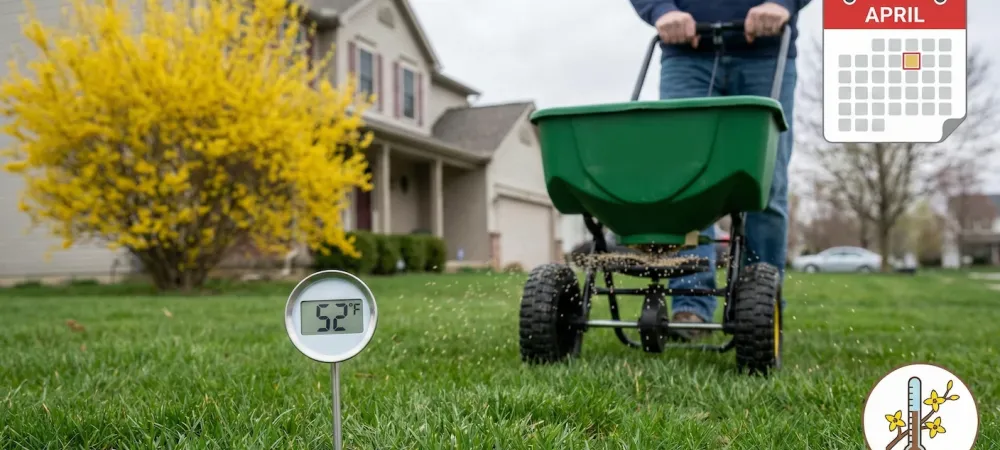
Apply crabgrass preventer when soil temperatures reach 50-55°F for 3-5 consecutive days, typically between late March and mid-April in Northeast Ohio. Cleveland-area lawns need applications around April 10-20 due to cooler Lake Erie influence, while Akron and Medina County properties should target April 1-15. The forsythia bloom serves as your visual cue; when those yellow flowers appear, it's time to apply.
Why Crabgrass Preventer Timing Determines Your Summer Success
Crabgrass seeds lie dormant in your soil through winter, waiting for the perfect conditions to germinate. According to Michigan State University Extension, "Eighty percent of germination will occur when soil temperatures at the 0-2 inch depth are consistently between 60 and 70°F". Pre-emergent herbicides create a chemical barrier in the top layer of soil that kills crabgrass seedlings the moment they sprout, but only if that barrier exists before germination begins.
The compound problem starts with a single plant. Each mature crabgrass plant produces up to 150,000 seeds that remain viable in the soil for years. Apply your preventer too early, and it breaks down before crabgrass germinates. Apply it too late, and seeds have already sprouted past the point where pre-emergents work. The window between these two timing failures spans just 2-3 weeks in most locations across Northeast Ohio.
Pre-emergent effectiveness ranges from 80-90% when applied correctly, compared to 40-60% effectiveness for post-emergent treatments on young crabgrass. Prevention isn't just easier, it's significantly more effective and less expensive than fighting established weeds all summer.
Understanding Crabgrass Germination in Northeast Ohio
Crabgrass is a summer annual grass that germinates from seed each spring. The Connecticut Agricultural Experiment Station notes that "the best time to apply a preemergence herbicide is before or at the time Forsythia is in full bloom or when soil temperatures reach 55°F for four to five consecutive days".
Temperature drives everything. Crabgrass seeds begin germinating when soil temperatures at 1-2 inches depth consistently reach the mid-50s. This typically occurs 10-14 days after forsythia bushes bloom. University of Missouri Extension research shows that "the preemergent product is most effective when the mean soil temperature at 1-inch depth reaches 50 to 55 degrees Fahrenheit for five days in a row."
Microclimates within your property create variation. Areas along driveways, sidewalks, and south-facing slopes warm faster than shaded or northern exposures. Crabgrass germinates first in these hot spots, which is why these areas often show the worst infestations by mid-summer.
Step-by-Step: How to Apply Crabgrass Preventer Correctly
Step 1: Monitor Soil Temperature
Start checking soil temperature in mid-March using a soil thermometer inserted 1-2 inches deep. Take readings in mid-morning for consistent results. Online resources like the GreenCast Soil Temperature tool provide real-time data for your specific zip code. Watch for the magic number: 50-55°F for three to five consecutive days signals optimal application timing.
Step 2: Check Your Forsythia (The Natural Indicator)
When forsythia bushes display full yellow blooms, soil temperatures have typically reached the pre-emergent application window. This phenological indicator has guided lawn professionals for decades because forsythia responds to the same soil warming that triggers crabgrass germination.
Step 3: Choose Your Product Wisely
Professional-grade pre-emergents containing prodiamine, pendimethalin, or dithiopyr offer 8-12 weeks of control. Products with dithiopyr provide limited post-emergent activity on very young crabgrass (1-3 leaf stage), offering a slight margin for error. Commercial formulations last significantly longer than retail box-store versions.
Step 4: Apply Evenly Using Proper Equipment
Use a calibrated spreader to ensure even coverage. Gaps in the application create opportunities for crabgrass to thrive. Walk at a steady pace, slightly overlapping each pass. Pay special attention to problem areas: driveways, sidewalks, mailbox areas, and southern exposures need thorough coverage.
Step 5: Water In the Application
Apply 0.25-0.5 inches of water within 24 hours to move the herbicide into the soil where crabgrass seeds germinate. North Dakota State Extension emphasizes "you need to apply 1/2 inch of water to dissolve the granules and move the herbicide into the top layer of soil". Avoid applying before heavy rainfall that could wash the product away.
Step 6: Avoid Soil Disturbance
Once applied, the pre-emergent creates a chemical barrier in the top layer of soil. Aerating, dethatching, or aggressive raking breaks this barrier and creates pathways for crabgrass germination. Save these maintenance tasks for fall.
Regional Timing Differences Across Northeast Ohio
Location determines your success more than any calendar date. Here's how to time your application based on where you live in Northeast Ohio.
Cleveland and Lake Erie Shore Communities (April 10-20)
Lake Erie's cooling influence keeps soil temperatures lower later into spring. Properties in Eastlake, Euclid, Mentor, Willoughby, and Wickliffe typically require applications 10-14 days longer than inland areas. Don't rush your application based on calendar dates; let soil temperature guide your timing.
Medina and Akron Areas (April 1-15)
Central locations, including Medina, Brunswick, Akron, Cuyahoga Falls, and Stow, fall in the mid-range timing window. These areas warm faster than lakefront properties but slower than southern Ohio locations. Mid-April represents the sweet spot for most properties in this region.
Southern and Inland Properties (Late March to Early April)
Areas farther from Lake Erie's influence, including the southern parts of Medina County and properties with significant southern exposures, may need applications as early as late March during warm springs. Your specific microclimate matters more than general regional guidelines.
Split Application Strategy for Extended Protection
Professional lawn care programs use two applications 6-8 weeks apart for superior results. The first application in early April establishes the primary barrier during peak germination. The second application in late May or early June extends protection through the summer, when the first application begins to break down.
Why professionals prefer split applications:
- Extends the effective control period from 8-12 weeks to 16-20 weeks
- Provides overlapping protection as the first application degrades
- Covers late-germinating crabgrass seeds in warmer soil pockets
- Reduces breakthrough crabgrass by 30-40% compared to single applications
Split applications cost more upfront, but eliminate the expense and frustration of post-emergent treatments throughout the summer. Many homeowners discover that preventive weed control at the right time saves money compared to reactive weed control.
What to Do If You Missed the Application Window
Life happens, and sometimes you realize in mid-May that crabgrass preventer is already past due. Post-emergent options exist, but expectations need to be adjusted. Products containing dithiopyr (Dimension) or fenoxaprop (Drive, Acclaim) can control young crabgrass in the 1-3 leaf stage with 40-60% effectiveness.
The harsh reality: Post-emergent herbicides become progressively less effective as crabgrass matures. By mid-summer, established crabgrass plants are resistant to most homeowner-available treatments. At this point, the most practical approach is to accept this season's outcome and plan for prevention next year.
Use the remainder of this season to build lawn density through proper mowing, watering, and our professional fertilization services. A thick, healthy lawn naturally suppresses crabgrass by shading the soil and preventing seed germination. Consider our fall aeration and overseeding program to fill thin areas where crabgrass thrives.
The Pre-Emergent and Overseeding Conflict
Pre-emergent herbicides cannot distinguish between crabgrass seeds and desirable grass seeds. If you apply standard crabgrass preventer in spring, you cannot successfully overseed until the product breaks down; typically, 8-12 weeks later, well past the ideal spring seeding window for cool-season grasses.
Fall overseeding solves this dilemma. September provides optimal conditions for germinating Kentucky bluegrass, perennial ryegrass, and tall fescue, the cool-season grasses that thrive in Northeast Ohio. By overseeding in the fall, you avoid the crabgrass preventer conflict entirely while seeding during the best possible conditions.
One exception exists: Tenacity (mesotrione) allows simultaneous seeding and crabgrass prevention. However, this specialized product costs 2-3 times as much as standard pre-emergents and requires precise timing of application. For most homeowners, fall seeding paired with spring crabgrass prevention delivers better results at a lower cost.
Common Application Mistakes That Waste Money and Time
Applying Too Early (February-Early March): Pre-emergents break down through microbial activity, rainfall, and irrigation. Apply in February, and the product degrades before crabgrass germination begins in April. You've wasted money and left your lawn unprotected when it matters.
Applying Too Late (Mid-April or Later in Warm Springs): Once soil temperatures consistently exceed 55-60°F, crabgrass seeds have already germinated. Pre-emergents don't kill emerged seedlings; they only kill seeds attempting to germinate. You've missed the window.
Skipping the Watering-In Step: Granular pre-emergents require water to move into the soil where seeds germinate. Without irrigation, the product sits on grass blades and the soil surface, where it is less effective.
Aerating After Application: Core aeration creates thousands of holes through your pre-emergent barrier, providing ideal germination sites for crabgrass seeds. Always aerate in the fall, never in the spring after a pre-emergent application.
Assuming Calendar Dates Trump Soil Temperature: Springs vary dramatically. Some years bring early warmth; others feature prolonged cold. Soil temperature and forsythia bloom stage provide reliable indicators, while calendar dates do not.
Professional Application vs. DIY: Understanding the Difference
Professional lawn care programs monitor soil temperatures daily across service areas and apply pre-emergents at the precise optimal moment for each microclimate. Commercial products contain higher active ingredient concentrations and last 3-4 weeks longer than retail formulations.
Professional-grade spreaders ensure even distribution without gaps that create breakthrough spots. Technicians understand application rates, watering requirements, and timing variations across different property conditions. They build pre-emergent applications into comprehensive programs that include fertilization, pH management, and seasonal care that naturally suppresses weeds.
Our professional lawn care program includes properly timed crabgrass preventer application as part of a comprehensive approach to year-round lawn health. Learn more about maintaining your lawn throughout the seasons in our year-round lawn care guide for Ohio homeowners.
Prevention Tips for Long-Term Crabgrass Control
- Mow High: Maintain 3-3.5 inches of grass height through spring and summer to shade soil and prevent crabgrass seed germination
- Water Deeply and Infrequently: Encourage deep root growth in desirable grasses while avoiding conditions that favor shallow-rooted crabgrass
- Fertilize Appropriately: Spring nitrogen encourages crabgrass growth; focus heavy fertilization in fall when cool-season grasses thrive
- Overseed Thin Areas in Fall: Dense turf physically prevents crabgrass establishment by eliminating bare soil where seeds germinate
- Address Compacted Soil: Fall core aeration improves drainage and reduces stress conditions that weaken turf and favor weeds
- Monitor Problem Areas: Mark hot spots along driveways and sidewalks for extra attention during pre-emergent application
When to Call Professional Lawn Care Services
Timing crabgrass preventer correctly requires monitoring, proper equipment, and the right products. Most homeowners benefit from professional services when:
- You lack time to monitor soil temperatures and apply at the optimal 2-3 week window
- Previous DIY applications resulted in breakthrough crabgrass due to timing or application errors
- Your lawn shows uneven results with bare spots, thin areas, or persistent weed pressure
- You want split applications that extend protection through the summer, but lack time for multiple applications
- Your property includes multiple microclimates requiring different application timing
Dyna-Green's lawn care professionals track soil temperatures across Northeast Ohio and schedule applications at the precise right moment for your specific location. Our organic-based fertilization program includes crabgrass prevention as part of a comprehensive approach to lawn health.
We've spent over 31 years perfecting application timing across Cleveland, Akron, and Medina County properties. Our split application strategy and commercial-grade products deliver results that eliminate crabgrass frustration. Even better, we back our services with a satisfaction guarantee that removes risk from your decision.
Take Control of Your Lawn This Spring
The difference between a crabgrass-free lawn and a summer-long battle comes down to 2-3 weeks of application timing. Professional lawn care eliminates guesswork, provides commercial-grade products, and delivers consistent results backed by decades of Northeast Ohio experience.
Don't gamble with DIY timing when professional prevention costs less than the frustration of fighting crabgrass all summer. Dyna-Green monitors soil temperatures and applies crabgrass preventer at the perfect moment for your specific location. Our comprehensive lawn care programs include properly timed applications plus ongoing maintenance that keeps your lawn thick, healthy, and naturally resistant to weeds.
Get your free lawn analysis today. Call us or request your free quote online. Let's get ahead of crabgrass season together.
Sources
- Aulakh, Jatinder S., and Rose T. Hiskes. "Crabgrass (Digitaria spp.) Control in Home Lawns." The Connecticut Agricultural Experiment Station, State of Connecticut, https://portal.ct.gov/-/media/caes/documents/publications/fact_sheets/valley_laboratory/crabgrasscontrolfactsheetpdf.pdf.
- Chhetri, Shawn. "Now is the time to apply spring preemergent herbicides on lawns." University of Missouri Extension, 7 Mar. 2024, https://extension.missouri.edu/news/now-is-the-time-to-apply-spring-preemergent-herbicides-on-lawns.
- Frank, Kevin. "Timing crabgrass preemergence applications in spring." Michigan State University Extension, 18 Mar. 2020, https://www.canr.msu.edu/news/timing_crabgrass_pre_emergence_applications.
- McGinnis, Esther. "Dakota Gardener: Prevent Crabgrass This Spring." North Dakota State University Extension, https://www.ag.ndsu.edu/news/columns/dakota-gardener/dakota-gardener-prevent-crabgrass-this-spring.